What a Table Can Do
Authors: Joy Lee, Abigail Park, and Joshua Cho
In the fall of 2025, I joined the Korean American Community Foundation’s Community Grants Committee because I wanted a way to give back to the Korean American community I grew up around in the Bay Area. The Foundation opened the door and invited volunteers like me into the work, not just to observe but to listen and engage meaningfully. One of the groups I joined focused on the East Bay Korean-American Senior Services Center. I worked alongside Nathan Chang, who led our team, and Hyun Joo Park.
As we read through the Center’s history and mission, it became clear that this was an organization built around presence. Founded in 1980 by members of the local Korean community, the Center continues to serve roughly thirty to forty seniors who gather regularly to share meals, exchange information, and support one another in ways that do not always appear on program lists but matter deeply in everyday life. This is a part of the community that can easily be overlooked. Many seniors live quietly, often speaking primarily Korean and relying on word of mouth for information about housing, benefits, or medical care. At the Center, conversations move naturally from bingo, lunch, history lessons, and to practical guidance. Someone explains a Social Security letter. Someone shares where to find food assistance. Someone helps interpret a document that arrived in the mail. During the review process, it became clear that the Center had fewer formal programs than some organizations. The explanation was not lack of effort. The Center had been doing steady work for decades even as it grew somewhat isolated from broader partnerships.
And still, three times a week, people kept showing up. That consistency felt meaningful. The Center was not built around events or large initiatives. It was built around presence. A place where people knew they could sit down and speak comfortably among others who understood them. Around the same time, I was looking for a place where students connected through Rizes Initiative, many of whom are Korean American youth in the East Bay, could volunteer in a way that was culturally meaningful. When the opportunity to spend time at the Center came up, they were immediately interested. We decided to begin the way many (Korean) relationships begin. By setting a table and sharing a meal.

Pictured: D. Lee with J. Jeong (November 2025)
Joy Lee (14), one of the student volunteers, wrote:
“This was my first time volunteering at a senior center, and through this experience, I gained a new sense of gratitude. Although I have volunteered at events in the past, volunteering here opened a new perspective for me. I realized that sharing my gratitude with others truly makes a difference within a community. Helping a group of people I am not usually around made a strong impact on me, as I discovered that I genuinely enjoy helping and uplifting others, regardless of the community.
After serving all the food, I felt especially grateful to see how even one small act of service can make a difference and bring people together. Though it may seem like a small act of kindness, I truly enjoyed the experience and hope to continue volunteering at more events in the future.
Abigail Park (13), also wrote:
“Most of my life revolves around school, sports, and using my phone, so going to the East Bay Korean-American Senior Services Center was something completely new. I think it was really meaningful because the elders were welcoming and genuinely happy to see us. This showed me that not only was I excited to volunteer, but they were excited for us to be there and join them during the time we volunteered. I thought volunteering here was a great way to grow my skills as a provider, to grow my communication skills, and serve the Korean community in the Bay Area.”
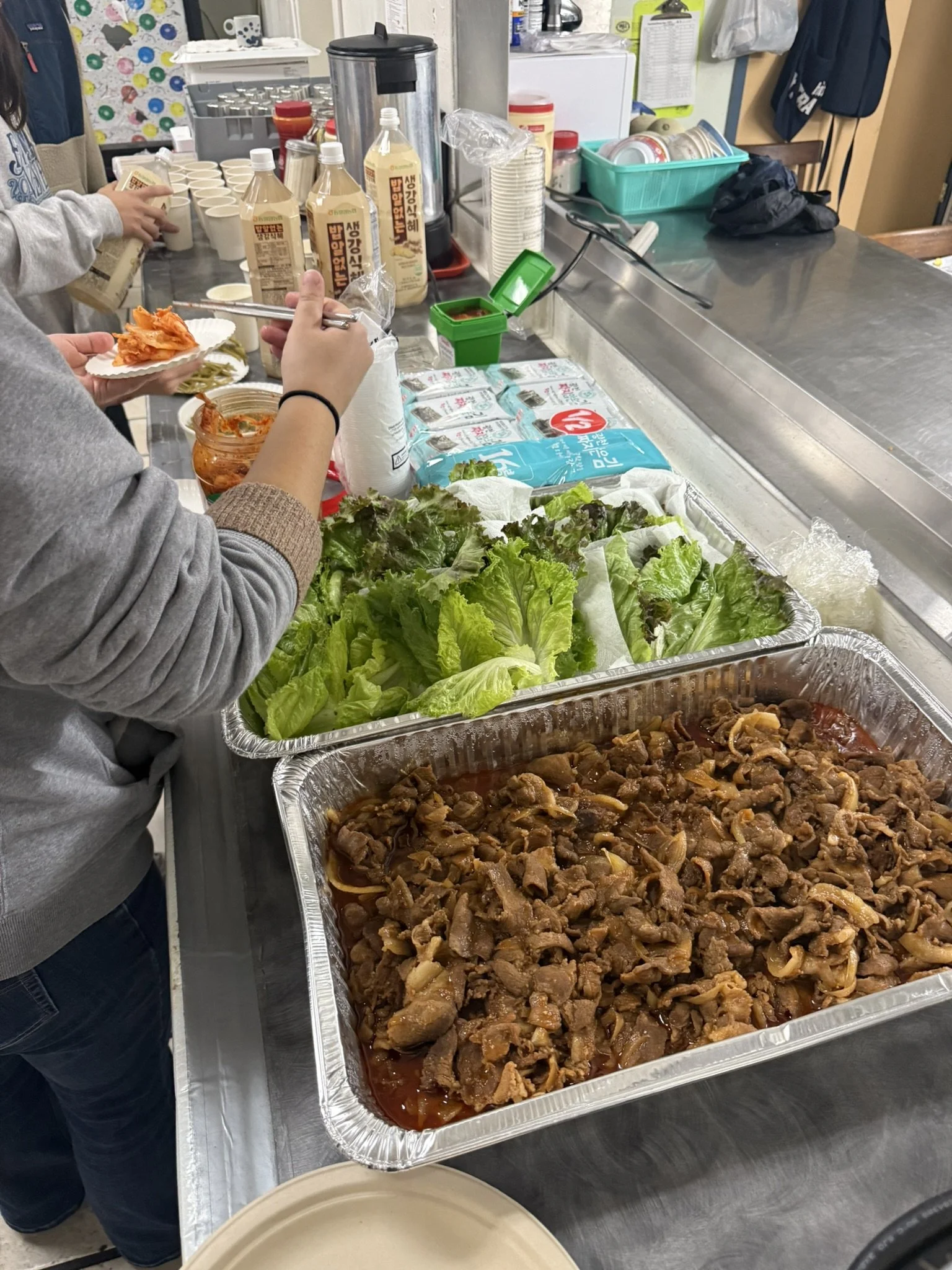
Seniors at the East Bay Korean American Senior Center enjoy a traditional Korean meal featuring jeyuk-bokkeum (spicy pork), assorted sides, and refreshing sweet rice punch.
I thought these words and experiences reflected the impact of the Foundation and the CGC’s work. A place that had served its elders for decades became, in a single afternoon, a place a student wanted to return to. The Foundation helps sustain organizations like the Center and keep it visible. The Community Grants Committee gathers people who care about them. From that, new relationships take root. Students who might never have stepped inside now return each month, and seniors greet a new generation at their tables. The East Bay Korean-American Senior Services Center was not selected for funding during the 2025 to 2026 cycle. That does not lessen the steady work the Center has carried forward for decades, or the Foundation’s continued role in supporting and uplifting spaces like it over time. Learning about the Center made clear the care already present there and its place in the broader community the Foundation brings together.
I am grateful to have been part of it and look forward to returning to the Committee next year, and to hearing the many other stories that show how, in different ways and different places, the CGC keeps our community moving forward together.
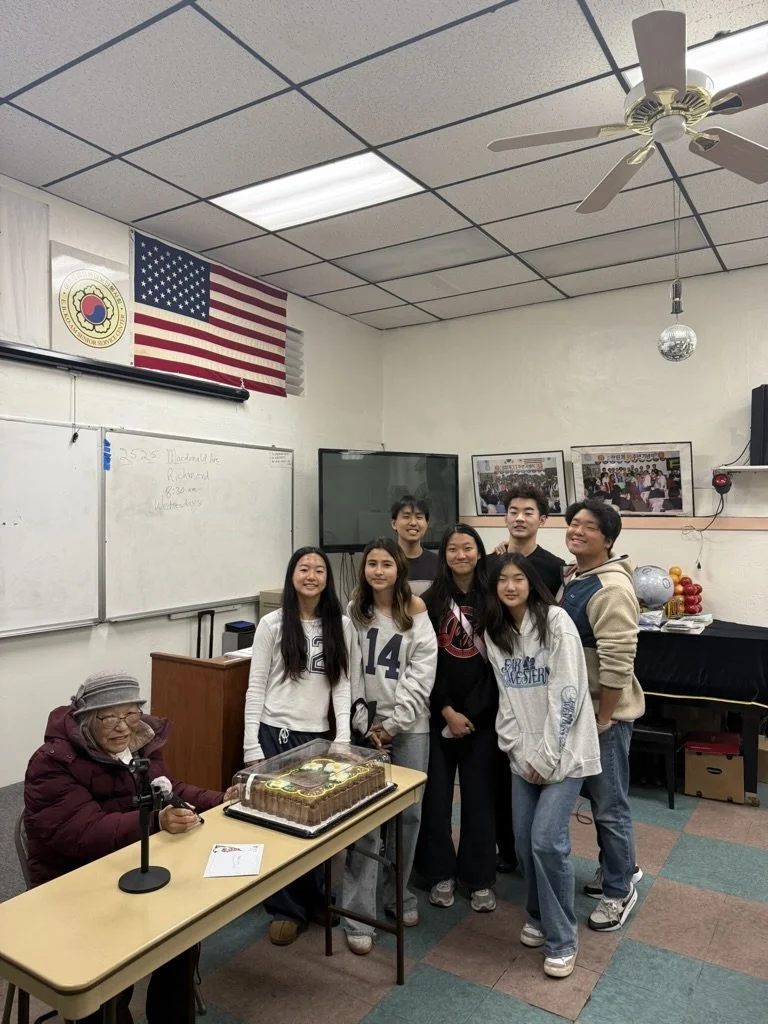
Pictured: J. Selby with J. Lee, E. Fealk, O. Kim, A. Park, D. Jeong, D. Lee, and J. Park (December 2025)