State of the Community
A LOOK BACK ON 2025
This past year has been challenging for many Korean Americans. Along with the high-profile immigration enforcement actions from the summer, there are economic and health issues that have reached crisis levels. At the same time, charitable giving has reached new levels, with over $592 billion being donated by donors in 2024. Reconciling these seemingly contradictory trends requires some background information. To download the complete presentation, click here.
Giving is Evolving
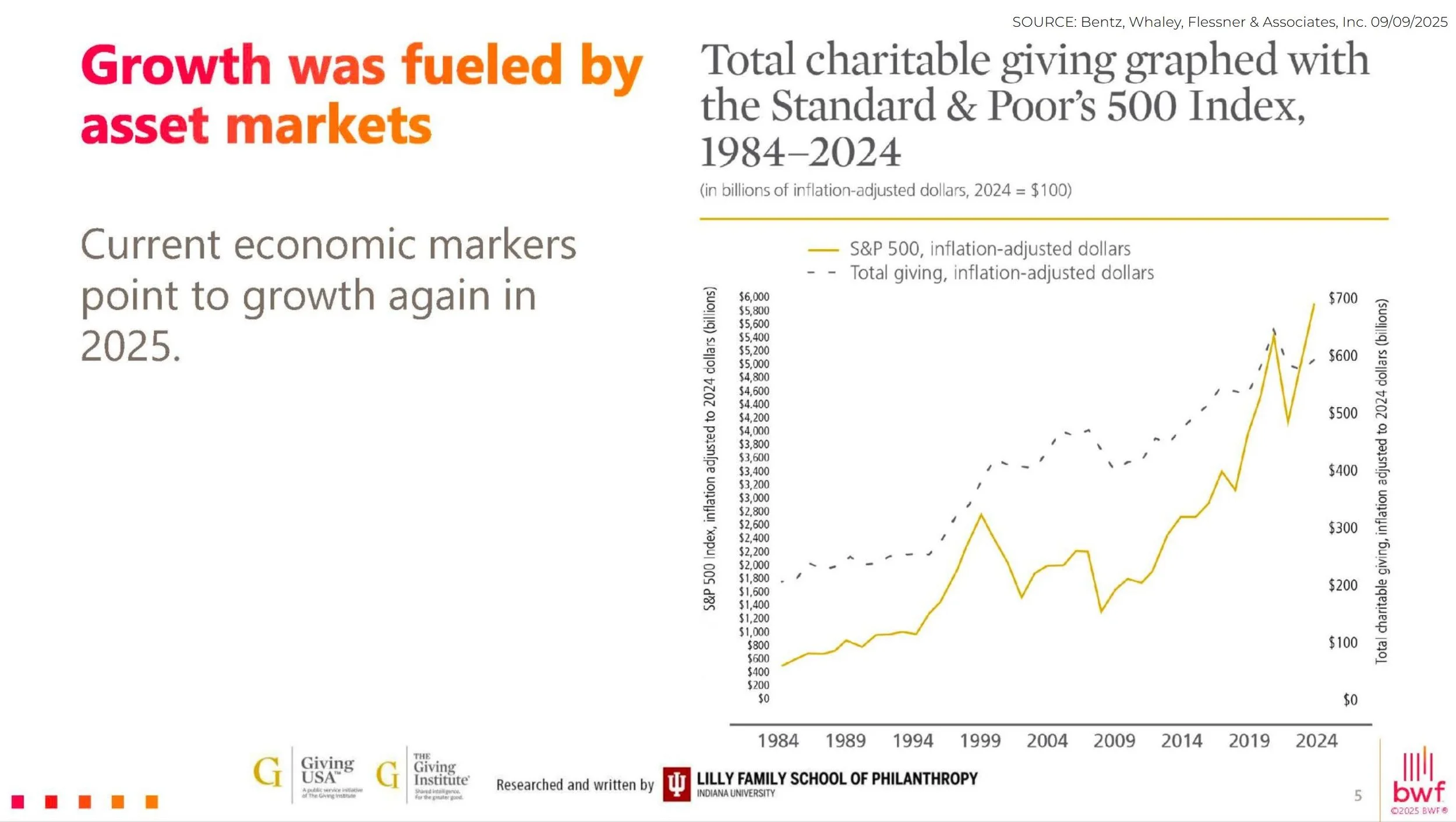
For the first 200 years, American charitable giving was tied to the overall economy, i.e. when the economy was strong, giving was higher. But in the past 50 years, giving has shifted to match the performance of the stock market, which isn’t always in sync with the overall economy. In 2024, Americans gave over $592 billion to nonprofits, but this incredible generosity came from fewer people and groups. For the first time in American history, less than half of households reported charitable deductions. And the number of formal volunteers has dipped to historic lows as well. According to Bentz, Whaley, Flessner & Associates (09/09/2025), giving and volunteerism have taken on different forms.
More people are giving directly to those in need - either cash or via crowdfunding.
Rather than registering in formal volunteer positions, people are offering casual, unpaid help to friends, family, and neighbors without organizational involvement. Examples include helping with household chores like gardening or running errands for an elderly neighbor, babysitting, providing transportation, or organizing a neighborhood cleanup.
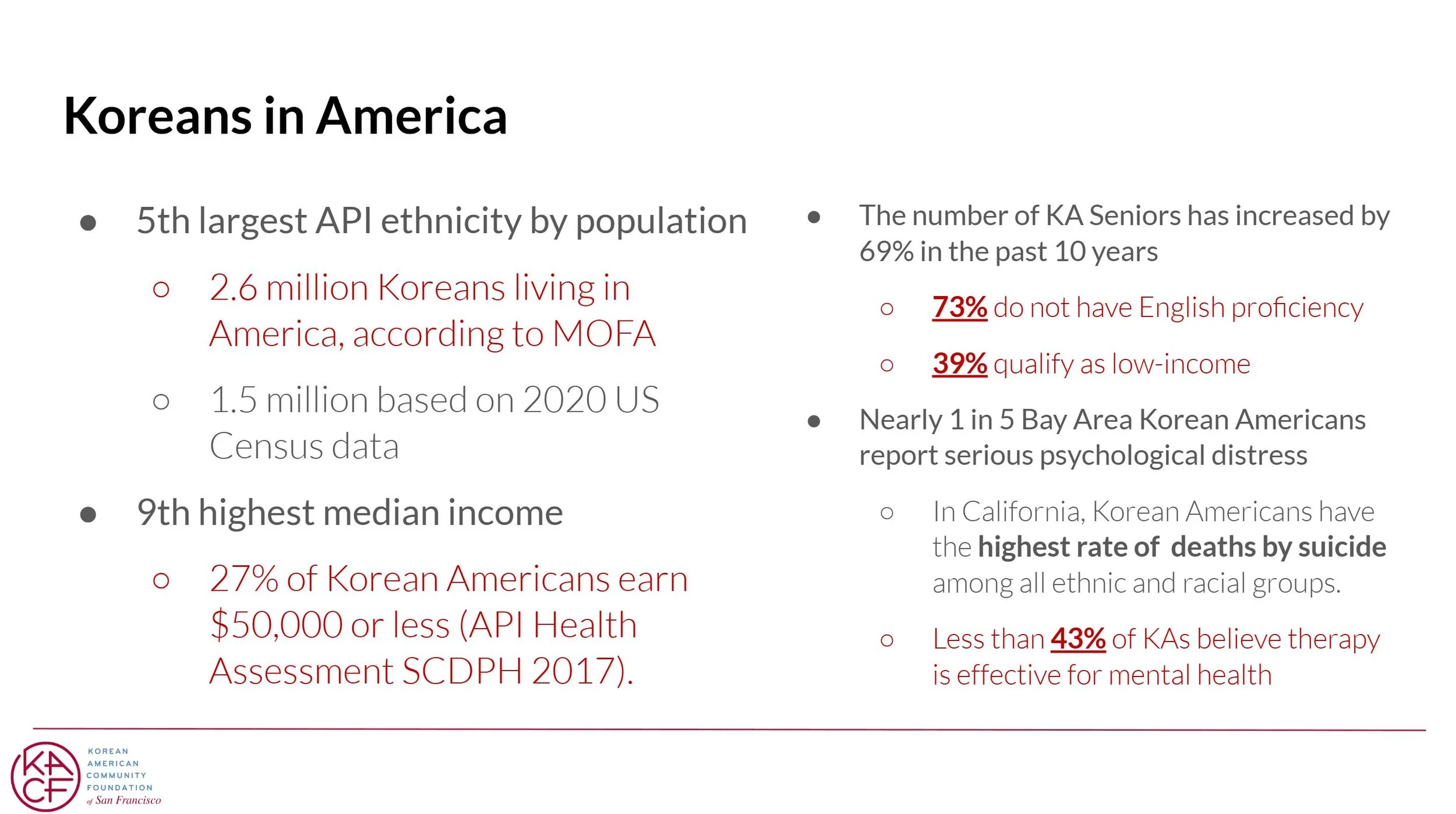
But even with record donations, the distribution of those funds is not reaching some communities. Despite being the fastest-growing demographic and currently representing 7% of the population, Asian Americans receive only 0.34% of private funding for programs and nonprofits (AAPIP, 2025 AANHPI Funding Snapshot, 07/31/2025).

From the Front Lines
In mid-year check-in meetings with seven of KACF-SF's grantee partners, several key themes emerged regarding grant progress, community needs, and persistent challenges.
Funding Instability and Cuts. Local and state budget cuts of 30 to 100% for some programs, including legal aid, mental health, and senior nutrition.
Increased Demand and Complexity of Needs. Dramatic rise in complex mental health issues, including trauma, severe depression, and dual diagnoses, compounded by socioeconomic factors and the political climate. Increasing demand, with waiting lists for popular classes for seniors. Higher volume and complexity of immigration cases due to frequent policy changes and increased community anxiety. Increased incidents of domestic violence, elder abuse, substance use, and legal problems, as well as youth depression.
Capacity Strain and Workforce Shortages. Severe shortage of Korean-speaking mental health professionals and community service workers.
Systemic Barriers, including Gov and Cultural. API communities are often "more prone to be hidden" and less willing to engage in public protest compared to other immigrant groups, lacking political backing.
Where Are We Investing in 2026?
Advocacy Support: KACF-SF's physical presence at public hearings and continued support for advocacy efforts against funding cuts.
Outreach and Networking: Connecting organizations with the Korean community for deeper engagement, making "warm referrals" to other funders and facilitating funder briefings.
Capacity Building: Identifying robust evaluation tools, exploring funding for services to unmet populations like youth and supporting pro-bono legal services.
Workforce Development: Discussing strategies to address the shortage of Korean-speaking professionals, potentially through fellowships or volunteer engagement
How can you help?
Meeting the challenges of 2025 starts with listening. KACF-SF needs to hear from people in the community to learn more about what you are experiencing. If you would like to share your thoughts or discuss any of the trends impacting the Korean American community, schedule time with us now.